what was native american life like before european contact

Introduction

Native American life before European contact was incredibly diverse and complex. Tribes developed intricate (negation) networks of trade, bartering goods and services among each other across vast distances! They had their own languages, religions and customs that varied greatly from tribe to tribe.

Their diets consisted mostly of wild game, nuts, berries, fish and whatever else they could forage from their environment. In addition to hunting and gathering, many tribes practiced agriculture on a small scale. This allowed them to supplement their diet with corn, beans, squash and other crops. They also kept domesticated animals such as chickens or dogs for various tasks.

The social structure of the Native Americans was based on clan relationships rather than political ones. They were highly spiritual societies that believed in multiple gods which governed different aspects of nature. The shamans were considered important members of society since they served as intermediaries between the physical world and the spirit realm.

In terms of warfare (exclamation mark), most Native American tribes did not engage in large-scale conflicts but instead focused on smaller skirmishes with neighboring tribes over land rights or resources. They often used bows and arrows as weapons but some tribes also developed more sophisticated weapons like lances or war clubs made from stone or wood.

Overall, Native American life before European contact was full of rich cultural practices that shaped their daily lives! It's incredible how much these societies managed to achieve despite having limited access to technology or resources compared to today's standards.(transition phrase). Even though Europeans brought drastic changes upon arrival, the ingenuity of the native people can still be seen in modern times through their descendants who continue to preserve these traditions despite adversity.
Introduction

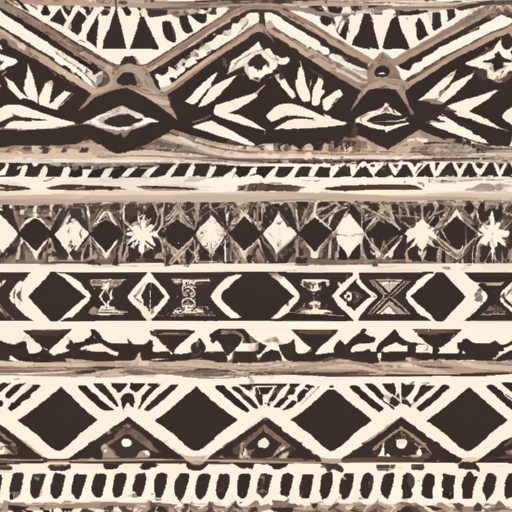
History of Native American Patterns

Native American life before European contact was very diverse and varied. It (included) tribes of many different cultures, languages and lifestyles. (Most) of these tribes were semi-nomadic, meaning they would often move their settlements to follow food sources or other resources. They lived off the land; hunting, fishing, gathering plants and berries for sustenance! They also farming in some areas as well.

These various tribes had distinct customs and traditions that differed from one another. For example, some may have believed in multiple gods while others practiced ancestor worship. Some even participated in religious rituals such as dance ceremonies or sweat lodges!

However, despite this diversity, most Native Americans shared a few common characteristics such as an emphasis on communal living and strong kinship ties with each other. Their societies valued respect for the elderly and for nature's resources alike. In addition to this, they had a strong sense of justice which usually involved an elder mediating disputes among members of their tribe.

Overall, Native American life before European contact was quite complex yet intertwined with spiritualism and harmony with nature - something that has been lost over time due to colonization by Europeans. This loss has created an immense void that can never be truly filled again but should still be remembered fondly!

Types of Patterns

Native American life before European contact was diverse and complex. It varies greatly depending on the tribe, but there were some common themes. Generally, (Natives) lived in close-knit communities, governed by their own laws and social structures. Most tribes had a hierarchical structure of classes based on wealth or status, as well as clan systems with shared responsibility for the group's welfare! The subsistence lifestyle of most Native American societies was centered around hunting and gathering with agriculture playing an important role for some groups. Religion also played a major part in everyday life; many tribes believed in an omnipotent creator and practiced rituals to honor the spirits of nature.

In addition to these beliefs, Natives also had unique systems of art and music, used for both sacred ceremonies and entertainment purposes. Artwork included pottery making, basket weaving, beadwork, and painting on hides or clothing. Music typically involved drums or rattles along with singing that could be accompanied by dancing or storytelling. All together these elements made up the rich cultural heritage of pre-contact Native Americans which still exists today!

Uses of Patterns in Native American Culture

Before European contact, Native American life was very different from today. Traditional tribes lived a nomadic lifestyle, often moving in search of food and resources (hunting grounds, water sources). Without any centralized government, leaders from each tribe would come together to reach a consensus on important decisions. The tribes were in constant communication with one another, trading goods and exchanging cultural practices. Though it was not always peaceful - feuds between neighboring tribes were common - there was usually an understanding that members of the same nation should remain united against outside forces!

In addition to sustaining themselves through hunting and fishing, many Native Americans also farmed crops like corn, beans and squash. While these foods provided them with sustenance, they also formed the basis for more elaborate celebrations that honored their ancestors and gave thanks for the harvest season. They had vibrant spiritual lives as well; rituals served as a way for them to connect with nature and understand their place in the world.

Overall, before Europeans arrived on their shores Native Americans enjoyed dynamic cultures where people worked together to ensure survival and celebrated every success with joyous festivities! It's hard to imagine what life would have been like if colonization hadn't occurred; thankfully we can continue learning about traditional ways so future generations can appreciate this heritage too.

how to find your native american heritage

How to Identify Genuine Native American Patterns

Native American life prior to European contact was incredibly varied and complex. From a spiritual perspective, many Native American societies believed in (multiple) powerful supernatural forces capable of explaining the world around them. They would often hold ceremonies to honor these gods or spirits! Their traditional lifestyles were also heavily rooted in communal living and subsistence farming, and their early economic systems focused on bartering goods rather than money.

Additionally, Native Americans had an incredibly rich culture that included storytelling, music, art and dance. These activities helped to bring people together and celebrate their unique identities. In terms of social structure, most tribes were organized into clans based on relationships between families. This allowed them to build strong ties within their communities and provide mutual support.

Last but not least, pre-contact Native Americans also held certain values such as respect for nature and reverence for elders which still remain relevant today. Overall, it is clear that Indigenous peoples had developed intricate beliefs and practices long before Europeans arrived in the Americas!

Conclusion

Native American life before European contact was a unique and fascinating way of life. It was filled with rituals, celebrations, art, music(, and) storytelling that were integral parts of their culture. The clothing they wore was ornate and often decorated with beads, shells or feathers to signify social status and tribal affiliations. These decorations served as symbols of the individual's place in society and could even be used to indicate rank within the tribe!

In addition to clothing decoration, Native Americans also had elaborate customs for hair styling. Women usually kept their hair long and often adorned it with ribbons or feathers while men opted for braids or ponytails. Besides being stylish, this meant that one's hairstyle identified them as part of a specific tribe or group.

The Native Americans’ spiritual beliefs were so deeply embedded into daily life that it permeated every aspect of their culture. They celebrated holidays such as solstices (solstice) and equinoxes by performing dances around bonfires in honour of the gods, engaging in communal feasts (feast), exchanging gifts (gift) and playing traditional games like lacrosse (lacross). Their ceremonies were intricate affairs where they connected to their spirituality through chanting, singing songs(,) and drumming.

Before European contact Native American tribes lived peacefully alongside nature; their lifestyle intertwining with the natural environment rather than conquering it. Despite the great changes brought about by colonization which has caused much suffering these cultures have managed to survive and still retain many aspects of their traditions today!

Native American life before European contact was vastly different from the one we know today. Through (hunting, gathering, and) agriculture, tribes were able to sustain their lifestyle! They practiced crop rotation, irrigation, terracing and fertilization techniques - all without the technology of today. In addition to agriculture, they also had a spiritual belief system that connected them to the land and nature around them.

Their way of living was in harmony with nature – their diet consisted of fruits and vegetables foraged from the land around them. Furthermore, they had an intricate trading system with other tribes which allowed them to obtain items not available in their area. Additionally, they would sometimes use hunting as a food source – although it was not as common as gathering.

Interestingly enough(!), Native Americans did not have any concept of private property or money prior to European contact! All resources were shared among members of each tribe. This made for strong relationships between families and communities that relied on each other for survival.

Overall, Native American life before Europeans arrived was very different from what we are used to today. With far fewer material possessions but much more connection to the land and nature around them, these societies were able to thrive for generations until European settlers disrupted their way of life forever!

Traditional Native American activities before European contact included hunting, gathering, fishing, and farming.
Native American tribes were typically divided into smaller communities or clans composed of extended families that shared a common language and culture.
Prior to European contact, Native Americans lived across the continent in various geographic regions with diverse climates and environments.
Traditional Native American beliefs focused on animism and natural spirituality while the beliefs brought by Europeans emphasized monotheism and Christianity.
Before European contact, most indigenous groups used stone tools for hunting and gathering, as well as basic agricultural techniques such as fire-stick farming.