what is a shaman native american

Introduction

A Shaman is an ancient Native American spiritual leader and healer. They use their mystical powers to connect with the spiritual realm and help heal physical, mental, and emotional ailments (of their community). They are believed to have strong relationships with nature and its elements, such as plants, animals, stones, waters, winds and fire. They may also travel into an altered state of conscienceness to communicate with the spirit world!

Shamanism has been used for centuries in many parts of North America by various tribes. Shamans are respected for their knowledge of healing herbs and techniques as well as their ability to interpret dreams, visions and prophecies. In addition they often serve as mediators between the living world and the afterlife or other unseen realms.

In order to become a Shaman one must embark on a journey of self-discovery that includes fasting, vision quests, meditation and other rituals. These practices grant them access to powerful energies that can be used for healing or guidance seeking purposes. Although there are not formal requirements for becoming a shaman everyone agrees that it requires dedication unrivaled by any other profession!

Though Shamanism is still praticed today it is mostly found among indigenous tribes or those seeking spiritual enlightenment through traditional ceremonies. It is important to remember however that shamans aren't magical figures but rather regular people who have devoted themselves wholly devoutedly to this long-standing tradition!

Overall a shaman is someone who seeks connection with the spirit world in order to help bring balance into our lives; ultimately bridging together humans and nature alike! But more than anything else they represent hope - something we all need during these trying times.
Introduction

History of Native American Patterns

Shamanism is an ancient spiritual practice found in many cultures around the world, including Native American tribes. A shaman is a person who acts as a bridge between the physical and spiritual realms, where they access supernatural power to heal people or lead rituals. This role is held in high regard by these cultures and is seen as vital for maintaining balance within their communities (Gonzalez-Wippler & Guzman, 2002).

In Native American culture, a shaman can take on many roles such as a healer, seer, teacher or even spiritual leader. They are believed to possess powerful knowledge and possess the ability to traverse between worlds. For instance, they may enter into trance states to communicate with spirits or use special songs and chants to summon healing energy (Gomez-Pena & Lopez Austin, 1985). In addition, shamans often rely on divination tools like crystals and feathers to gain insight into matters of health or wellbeing.

Furthermore, shamans are consulted in times of crisis when individuals seek guidance about difficult decisions or require healing for physical ailments. By acting as mediators between ordinary life and spiritual life it is believed that shamans can facilitate transformation and help people find direction (Harvey & Hardman 2016). As such they serve an important purpose within their community – connecting them with both the land and spirit world!

In conclusion, we have seen how shamanism has been practiced by Native Americans since ancient times. Shamans are highly respected members of their society who provide valuable services such as healing illnesses and providing guidance during challenging times. Their ability to interact with both physical and spiritual realms makes them unique practitioners whose contributions continue to be valued today!

Types of Patterns

A Shaman is a Native American spiritual leader who engages in the practices of healing, divination, and communication with the spirit world. They are seen as being intermediaries between this life and the afterlife. Shamanism has been practiced for thousands of years by many different cultures around the world.

The beliefs and practices of a shaman are varied but they all share common elements. A shaman will typically use prayer, chanting, music, dance and other rituals to enter an altered state of consciousness. This altered state allows them to journey into unseen realms where they can seek guidance from their spirit guides or communicate with departed ancestors. It also allows them to commune with nature spirits and access powerful energy forces that can be used for healing or divination purposes.

Shamanic rituals often involve drumming or rattling which helps open up the shaman's senses and enhance their ability to receive messages from the spirit world. Additionally, shamans may use smoke baths or herbal concoctions as part of their rituals in order to cleanse negative energies from an individual or a space. Through these methods they can facilitate spiritual transformation on both an individual level and within communities at large.

Furthermore, shamans believe that everything in our physical world is interconnected with non-physical realities such as those inhabited by spirits and gods (or Goddesses). By connecting with these entities through trance work, they gain insight into how we should live our lives in order to maintain balance between us humans and nature (and all its inhabitants). This understanding enables them to provide advice on how best people can take care of themselves mentally, emotionally, spiritually - even physically - so they remain healthy throughout their lives!

In conclusion, it is clear that Shamans have long practiced beliefs and practices that connect us more deeply with ourselves as well as our environment; enabling us to better heal ourselves mentally, physically and spiritually! However: it is important to remember that these techniques should only be conducted under the guidance of experienced professionals who understand how best to tread this sacred path safely!

Uses of Patterns in Native American Culture

A shaman is an important part of Native American culture. They are believed to possess the power to connect with the spiritual world and use that connection to heal members of their tribes (as well as others). Shamans can also communicate with and help guide spirits, provide advice for those in need, and help bring balance back to nature.

The role of shamans varies depending on the tribe, but they typically serve as a bridge between physical and spiritual realms. For example, they may be called upon to perform healing ceremonies that involve singing, dancing, chanting, drumming and other rituals. They might also give advice about hunting or farming techniques or how best to interact with other tribal members. In addition, shamans often function as spiritual leaders within their communities.

Shamans have been around since ancient times and continue to play an important role in many Native American tribes today. They are respected for their knowledge and insight into both the natural world and the spirit world. Even though technology has changed many aspects of life, shamans remain a crucial part of many Native American cultures.

In conclusion, shamans have played an integral role in many Native American cultures for centuries! Their presence has allowed communities to maintain connections with nature and their ancestors’ spirits while adapting to changes over time. (Plus,) As long as people respect these traditions, shamans will continue to be a vital part of Native American culture!

How to Identify Genuine Native American Patterns

A shaman in a Native American tribe is someone who is believed to be able to communicate with spiritual entities and forces. They are thought to posses the power of healing, divination, and prophecy. Shamans have been around for centuries and are seen as highly respected members of their tribes.

Shamans take on different roles depending on the tribe they belong to. In some tribes, shamans serve as healers that aid in physical healing through prayer, herbs, and rituals. In others they act as intermediaries between humans and spirits or gods. They may also be called upon to perform divination for guidance or advice, or even provide prophecies about the future.

However, becoming a shaman isn't easy! It typically involves years of training under an experienced mentor before one can become certified as a shaman (or medicine person). This usually includes learning traditional tribal stories, songs, prayers, ceremonies, and rituals related to the tribe's spiritual beliefs. It also requires mastering certain skills like spirit-journeying and dream-interpretation in order to gain access to the otherworlds where they can seek out knowledge from higher beings!

Not all shamans are equal; some receive recognition from their peers due to their powerful abilities while others remain obscure more due to lack of opportunity than lack of skill. Notable shamans in Native American tribes throughout history include Black Elk (Oglala Sioux), Rolling Thunder (Cherokee), Fools Crow (Lakota Sioux), Wovoka (Paiute) among many others! Each of these figures had a major impact on their respective cultures and played key roles in preserving traditional practices such as sweat lodges and pipe ceremonies among others.

In conclusion, shamans play an important role within Native American tribes as mediators between humans and spirits/gods; providing guidance through divination/prophecy & healing through prayer & ritualistic means! With years of training required for certification & recognition only coming after gaining mastery over certain skills - it's no wonder why there have been so few truly notable shamans amongst many tribes throughout history!

Detailed Native American patterns

Conclusion

A shaman is a person who works with spiritual forces and energies to help people understand their place in the world. They are part of most Native American cultures, where they have been respected for centuries for their healing and spiritual guidance.

The potential benefits to working with a shaman are numerous. For one, shamans can provide insight into life issues and offer spiritual support when needed. They can also be a great source of knowledge about traditional practices that may otherwise be lost or forgotten. Additionally, shamans often employ creative problem-solving techniques to assist clients in navigating difficult times (e.g. using divination tools like tarot cards). Furthermore, they play an important role in keeping traditions alive through stories and songs passed down from generation to generation!

Moreover, shamans provide an opportunity to explore different perspectives on life and death by introducing us to the spirit realms which exist beyond our physical realm. By connecting with these realms we can gain access to a deeper understanding of ourselves and our place in the universe as well as receive guidance from our ancestors. Additionally, many shamans offer healing services such as soul retrievals which can be incredibly helpful if you're struggling with emotional pain or trauma related issues (e.g., PTSD).

Overall, working with a shaman has many potential benefits! From gaining wisdom about traditional practices, exploring new perspectives on life's mysteries, receiving powerful healing treatments, all the way to learning more about our ancestral heritage - there's something for everyone who seeks out this ancient practice!

A shaman (Native American) is someone who acts as an intermediary between the natural and spirit worlds. They are believed to have great power and influence over the spiritual realm. A shaman serves their community by healing the sick, bringing rain, removing curses and conducting rituals for various occasions.

In order to become a shaman, one must first go through rigorous training that can take years to complete. This includes learning traditional songs, chants and ceremonies as well as studying medicinal herbs and animal behavior. Additionally, shamans must be able to interpret dreams and omens in order to offer advice or guidance to their people.

One of the main roles of a shaman is healing. Shamans use a combination of ritual chanting, prayer and often herbal medicines to heal physical ailments as well as emotional traumas such as grief or depression. They also work with spirits in attempting to cure illnesses caused by supernatural forces like ghosts or demons. Shamans may also help their community in other ways such as predicting future events or providing divine protection from danger or harm.

In summary, a shaman (Native American) is someone who has gone through special training in order to act as an intermediary between the natural and spirit worlds. They use rituals, prayers and herbal remedies for healing both physical diseases and emotional traumas while offering divine protection when needed! Furthermore, they use divination methods like interpreting dreams for guidance on important matters within their community. In short, shamans play an integral role in Native American culture!

Detailed Native American patterns
A shaman is a medicine man or woman in Native American cultures who acts as an intermediary between the physical and spiritual worlds. They are believed to have healing powers through their connection with spirits, animals, plants, and ancestors.
Shamans often use intricate patterns from nature such as animal tracks, stars, trees, etc., to create symbolic designs that represent different aspects of life. These symbols can be used for healing ceremonies or rituals that involve connecting to the spirit world.
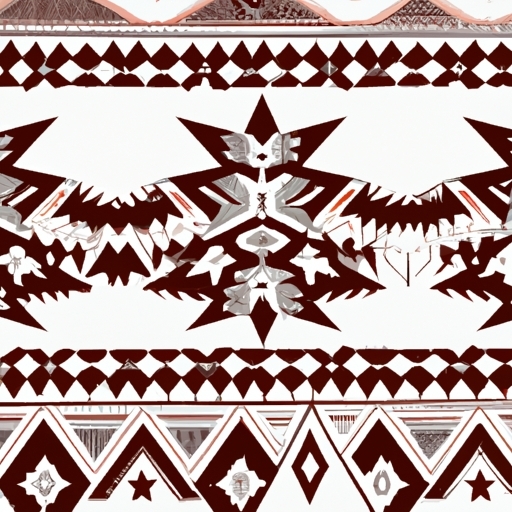
Detailed Native American patterns typically include geometric shapes such as triangles and circles, depictions of animals like bears and eagles, representations of natural elements like mountains and rivers, and symbols for spiritual concepts like balance and harmony.
Detailed Native American Patterns serve many purposes including aesthetic representation of cultural identity, emotional healing through meditation on the symbolism behind the pattern’s design elements, and spiritual guidance through consultation with shamans who interpret the meaning of these patterns.